










Quantum Computing: The Next Frontier of Bitcoin Security Challenges
As quantum computing advances, Bitcoin faces unprecedented threats to its cryptographic foundation. Industry experts debate whether Q-day—when quantum computers can break current encryption—is...

Key Takeaways
- Quantum computing poses a dual threat to Bitcoin: compromising the ECDSA signature algorithm and potentially disrupting SHA-256 proof-of-work mining
- The arrival of “Q-day”—when quantum computers can break modern encryption—could enable 51% attacks and expose private keys protecting billions in digital assets
- The crypto community is divided: some experts believe the threat is decades away, while others urge immediate action to transition to post-quantum cryptography
- The debate has shifted from “if” Bitcoin must evolve to “when” quantum-resistant standards should be implemented
The Looming Quantum Debate: Is Bitcoin Truly at Risk?
For years, the intersection of quantum computing and blockchain technology has been a hotbed of theoretical anxiety. While many industry veterans dismissed the threat as a distant science-fiction scenario, new research suggests that the vulnerabilities might extend beyond simple wallet security. Experts are now pointing toward a potential disruption of Bitcoin’s central economic and security architecture, warning that quantum supremacy could fundamentally alter how blocks are mined and secured.
Table Of Content
- Key Takeaways
- The Looming Quantum Debate: Is Bitcoin Truly at Risk?
- Mining at the Speed of Light: The Threat to Proof-of-Work
- A Divided Front: Skepticism vs. Urgency
- What is Q-day and why does it matter for Bitcoin?
- How could quantum computers execute a 51% attack on Bitcoin?
- Is the Bitcoin community preparing for quantum threats?
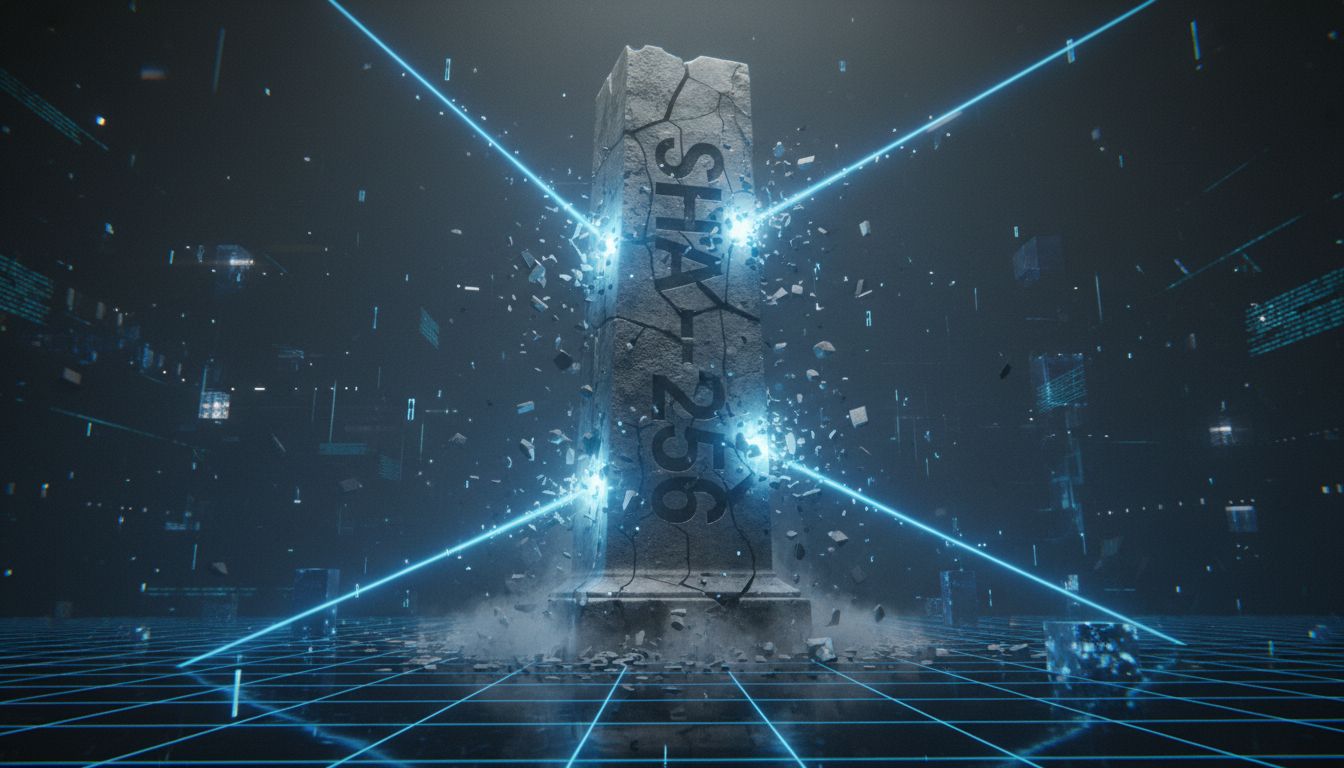
David Duong, the head of investment research at Coinbase, recently highlighted that the arrival of “Q-day”—the moment quantum computers become powerful enough to break modern encryption—could target two specific pillars of the Bitcoin network. These are the Elliptic Curve Digital Signature Algorithm (ECDSA), which secures transaction signatures, and the SHA-256 hashing algorithm, which powers the proof-of-work mining process.
Mining at the Speed of Light: The Threat to Proof-of-Work
The mechanics of Bitcoin mining rely on vast amounts of computational energy used to solve complex mathematical puzzles. Because quantum computers are theorized to operate exponentially faster than traditional silicon-based hardware, they could theoretically solve these puzzles with unprecedented efficiency. This creates a risk profile where a single actor utilizing quantum hardware could execute a 51% attack, gaining control over the blockchain’s history and future transactions by sheer brute force of superior technology.
However, many researchers believe that the physical scaling constraints of quantum hardware currently make “quantum mining” a secondary concern. The more immediate danger lies in the migration of digital signatures. If the underlying cryptography is compromised before the network can upgrade to quantum-resistant standards, the private keys protecting billions in assets could be laid bare to those with the right technology.

A Divided Front: Skepticism vs. Urgency
The timeline for this potential crisis remains a point of heavy contention among cryptographers. Cypherpunk legend Adam Back has consistently downplayed the threat, suggesting that viable quantum computers capable of such feats are likely decades away. In his view, the hysteria obscures the technical hurdles that quantum engineers have yet to clear.
On the other side of the fence, asset managers like Charles Edwards of Capriole Fund argue for proactive measures. They suggest that the window for preparing Bitcoin’s defenses is narrower than the skeptics believe. As quantum research accelerates, the debate is no longer about “if” Bitcoin must evolve, but “when” the transition to post-quantum cryptography must begin to ensure the network’s survival in a post-classical computing era.
What is Q-day and why does it matter for Bitcoin?
Q-day refers to the hypothetical point in time when quantum computers become powerful enough to break current cryptographic standards, including those protecting Bitcoin. This matters because Bitcoin’s security relies on encryption algorithms like ECDSA for transaction signatures and SHA-256 for mining. If quantum computers reach sufficient capability before the network upgrades to quantum-resistant cryptography, private keys could be exposed and the integrity of the blockchain could be compromised through advanced computational attacks.
How could quantum computers execute a 51% attack on Bitcoin?
Quantum computers could theoretically perform a 51% attack by solving Bitcoin’s proof-of-work mining puzzles exponentially faster than traditional hardware. This would allow a single actor with quantum technology to control the majority of the network’s mining power, enabling them to manipulate transaction history, prevent new transactions from confirming, and potentially double-spend coins. However, most experts believe the physical scaling constraints of current quantum hardware make this scenario less immediate than the cryptographic signature vulnerabilities.
Is the Bitcoin community preparing for quantum threats?
The Bitcoin community remains divided on the urgency of quantum threats. While skeptics like Adam Back believe viable quantum computers are decades away, others like Charles Edwards advocate for proactive implementation of post-quantum cryptography standards. The National Institute of Standards and Technology (NIST) has already released post-quantum cryptography standards, and ongoing discussions within the Bitcoin development community focus on when and how to implement quantum-resistant algorithms. The consensus is shifting from whether Bitcoin needs to evolve to determining the optimal timeline for such upgrades.


No Comment! Be the first one.